
快速答案
不要让AI生成一段Free-Form Summary后直接粘贴CRM。定义六个有版本的字段:Customer Need;Verified Context;Action/Observed Result;Current State/Unresolved Item;Next Action/Owner/Time;Evidence/Uncertainty/Handoff Limit。提取主张时附Source Pointer,验证Type/Permission,对重大或冲突内容要求复核,再用Idempotency写入并保留旧值。
选择字段名前的三条设计规则
映射到决策
每个Field必须帮助明确Reader进行Decide、Route、Act、Verify或Measure。若无法说明Downstream Decision,就不要新建字段或把文本交给模型。
值与证据分离
Field存紧凑Operational Value,旁边存Permission-Aware Source Pointer。复制整段Transcript会增加Privacy、Staleness、Contradiction与Access Risk。
使用受控空值与冲突
Unavailable、Not Applicable、Awaiting Verification、Restricted与Conflicting是不同状态。不能用“合理措辞”补缺失值;重大冲突路由给Human。
六个CRM字段合同
先把以下内容作为Logical Contract,再映射到CRM真实Object、Property、Association、Sensitivity Label、Pipeline与Permission。示例值均为假设,并刻意保留不确定性。
客户需求与请求结果
customer_need
记录Customer Task、Affected Object、Expected/Observed Result与Requested Remedy,保留客户原意而非Agent Diagnosis。多个Need分开,不能压成模糊Topic。
- 允许输入
- Customer Message、已认证Form Field、Reviewer获准查看的Attachment与Explicit Correction。
- 写入与验证规则
- 写成一个可测试陈述,引用或链接决定性语句;标记Ambiguity,不编造Motivation、Urgency、Sentiment、Identity或Business Impact。
- 示例值
- 客户无法导出8月Invoice CSV;期望包含全部Line Item;请求在其说明的Finance Review前获得可用导出。
已核验语境与限制
verified_context
只记录会改变Diagnosis、Permission、Policy、Routing或Safe Answer的语境:Product/Version、Workspace/Account Reference、Channel、Locale、Environment、Date、Plan、Region、Access Role与Constraint。
- 允许输入
- System-of-Record Property、Tool Response、Verified Identity Result、Current Policy/Version、Service Status与Customer-Confirmed Environment。
- 写入与验证规则
- 每个值标记Verified、Customer-Stated、Inferred、Stale、Unavailable或Conflicting;移除Secret与无关个人数据,受限Identifier放Protected Field。
- 示例值
- Web App · Export Module v3 · Workspace已Tokenize · Admin Role已验证 · en-GB · August Date Range · 检查时未发现Service Incident。
已执行动作与可观察结果
actions_results
按时间记录重要Diagnosis、Communication、Approval、Tool、Policy与Remediation Action;每个Action配Actor、Time、Input、Result与Evidence,不能只写“已排查”。
- 允许输入
- Conversation Event、Tool-Call Log、Approval、Ticket History、Status Check、Sent Message与Customer-Visible Test。
- 写入与验证规则
- 区分Attempted、Succeeded、Failed、Rolled Back、Skipped与Proposed;不能把API Acknowledgement写成Customer-Visible Success,也不能隐藏Duplicate Execution。
- 示例值
- Agent复现空行;用Idempotency Key将Export Job 842重试一次;Job完成,但下载文件仍缺Tax Line。
当前状态、处置与未解决事项
current_state
说明请求当前处于Resolved、Partially Resolved、Blocked、Awaiting Customer、Awaiting Internal Work、Monitoring或Closed,并列出每个Unresolved Issue Unit。
- 允许输入
- Latest Customer-Visible Verification、Ticket Status History、Incident/Problem Link、Dependency State、Specialist Decision与Reopen Evidence。
- 写入与验证规则
- 使用统一Disposition Vocabulary。Reply、Handoff、Queued Job、Workaround或Agent Belief都不等于Resolution;写明Observation Time及会让状态过期的条件。
- 示例值
- 14:20 UTC时Partially Resolved:Base Invoice Row可正确导出;Tax Row仍缺失;关联Defect INC-217由Finance Integrations复核。
下一动作、责任人与时间承诺
next_action
把Open State转为一个可问责Next Event:Action、Responsible Person/Team、Prerequisite、Due Time/Timezone或Trigger、Customer Update、Fallback与Escalation Condition。
- 允许输入
- SLA/Internal Target、Queue Ownership、Accepted Handoff、Dependency Commitment、Approval、Calendar/Workflow Event与Customer Preference。
- 写入与验证规则
- 区分Internal Target与Contractual Promise;不用“ASAP/很快”。若时间未知,写明Next Checkpoint与更新责任人。
- 示例值
- Finance Integrations负责Defect Validation;即使无Fix,也须在9月4日16:00 UTC前更新客户;若确认第二个Tenant则升级给Incident Lead。
证据、不确定性与交接护栏
evidence_limits
保留可让下一位Human核验其他五字段的Evidence Map:Source Message/Event ID、Relevant Version、Confidence/Abstention、Contradiction、Restricted-Data Pointer、Correction History、Summary Producer与Review Status。
- 允许输入
- Immutable Conversation-Part ID、Timestamp、Record/Property History、Tool Request/Result Reference、Policy Link、Model/Workflow Version、Reviewer Decision与Override Reason。
- 写入与验证规则
- 不要把不必要Transcript全文粘进CRM;下一Owner无法访问的证据不能当作可核验引用;Fact、Customer Statement、Model Proposal、Human Decision与Unknown须分开。
- 示例值
- Need: Message 18–21 · Context: Property History P55 · Action: Tool Event T90 · Message 24与SLA v6的Timing冲突 · 写入前需Human Review。
实操案例:纠正流畅但错误的摘要
本假设案例演示复核逻辑,不是OpenMax客户结果。客户报告Invoice CSV缺少Tax Line。首个模型摘要写“重试后导出已修复;客户今天需要文件”。两句看似有用但均无依据:重试后仍缺Tax Row,客户只说明Finance Review,并没说“今天”。
- 拒绝无依据解决结论。 Tool Completion只作为Action Result保留;Customer-Visible Export Failure仍是Current State。
- 纠正时间主张。 Requested Outcome只记录客户说明的Finance Review,不编造Date;Next-Action Field记录团队真实Checkpoint与Timezone。
- 保留问题边界。 Base Row可导出与Tax Row缺失共同构成Partial Resolution,二者不能互相覆盖。
- 控制写入。 Human复核冲突结果,查看Proposed Diff,批准五个Field;因Link不可访问退回Evidence Field,Pointer修正后才写入。
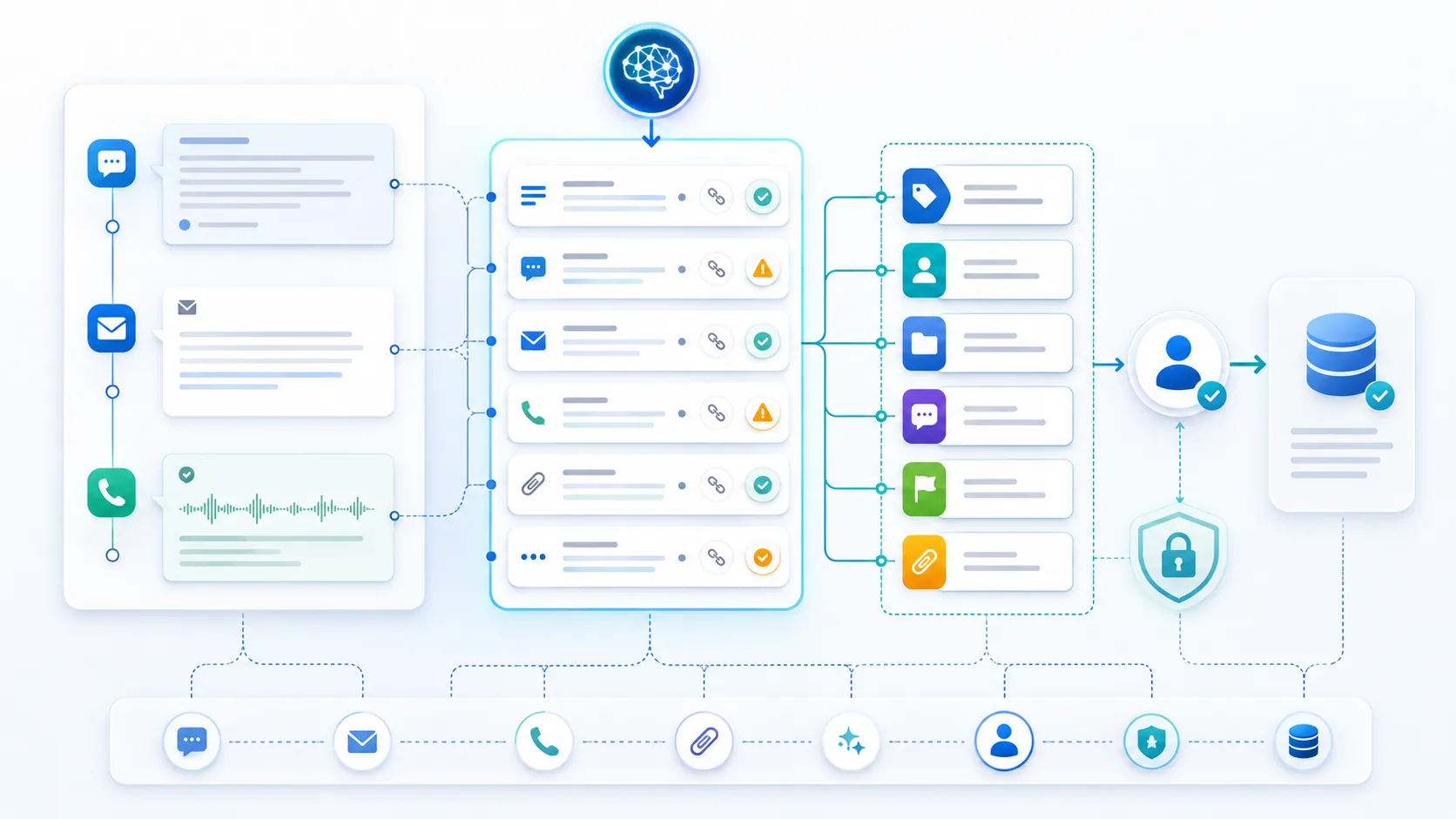
安全的七步提取与CRM写入流程
1–2 · 界定与汇集
选择Eligible Channel、Event Range、CRM Object、Target Property、Purpose、Role、Sensitivity与Retention。获取完整且获准的Conversation及关联Tool、Policy、Identity、Status与Record History;保留Message Order与Missing Segment。
3–4 · 提取与对账
以Actor、Source Pointer、Time与State提取Atomic Claim,并只映射一个Field。将Customer Statement与System Evidence对账但不静默覆盖;标记Conflict、Stale Data、Missing Context与Abstention。
5–7 · 验证、写入、核验
验证Schema、Enumeration、Locale、Date、Association、Permission、Sensitivity与Field Length;重大或冲突改动交Human。展示Diff,用Idempotency Key与Actor Identity写入,保留History,回读Record并监控Correction/Failed Handoff。
最低写入回执
summary_run_id · conversation_id · source_event_range · target_object_id · schema_version · field_name · prior_value_hash · proposed_value · evidence_pointer · value_state · producer · reviewer · approval · idempotency_key · write_result · read_back · correction_link · retention_class
OpenMax如何协调证据型会话总结
OpenMax可汇集获授权Conversation/System Context、提取带证据的Atomic Claim、填充六个Draft Field、显示Contradiction/Abstention、验证Target Schema/Permission、请求Human Approval、执行Idempotent Diff、核验Saved Record并路由Correction。Customer Remedy、Policy Interpretation、Sensitive-Data Access、Conflict Decision、Consequential Write与Final Acceptance由人负责。
隐私、准确性与权威记录边界
- 不得把Credential、完整Payment Detail、Health/Employment Narrative、Security Artifact、Secret或无关Personal Data写入普通CRM Summary Field。
- 不得用Generated Summary覆盖Transcript、Recording、Ticket History、Approval或Tool Log。摘要是Derived Handoff Artifact,不是每个Fact的Source of Truth。
- 没有定义且获准的证据,不推断Sentiment、Intent、Protected Trait、Causality、Urgency、Customer Value、Churn Risk、Fault或Resolution。
- 不能仅因Model Confidence高就执行重大写入。使用Field Validation、Conflict Rule、Role Permission、Human Approval、Idempotency、History、Read-Back、Rollback与Monitoring。
来源、编辑方法与限制
OpenMax编辑复核HubSpot当前Ticket API/Property Architecture(Custom Property、History、Association、Internal Identifier与Sensitivity)、Intercom Conversation-Part Model(Message、Actor与Timestamp),以及NIST AI RMF/Generative AI Profile关于Oversight、Evaluation与Confabulation的内容,再原创综合六字段架构、安全写入流程与假设导出案例。资料于2026年9月3日复核。
- HubSpot — CRM API: Tickets
- HubSpot — CRM API: Properties
- Intercom — Conversation Part model
- NIST — AI RMF Core
- NIST — Generative AI Profile
常见问题
摘要应替代Transcript吗?
不。按政策保留获授权Source Record。摘要是带Evidence Pointer、Version、Producer与Correction History的Derived Compact Handoff Artifact。
为什么不用一个Notes字段?
单字段会混合Customer Meaning、Fact、Action、State、Promise与Uncertainty,使Routing、Validation、Permission、History与Measurement不可靠。六个Logical Field可映射Native或Custom Property。
模型能推断缺失Owner或Due Date吗?
不能。模型可依据当前受控规则提出明确标记的Route Proposal;实际Owner必须接受Handoff,未知时间应设置Checkpoint,不能编造Promise。
客户说法与系统证据冲突怎么办?
保留双方Actor、Source与Time;字段标记Conflicting,暂停重大写入并路由给能检查Permission/Authoritative Record的人;不得静默选择更方便的值。
OpenMax可自动化什么?
可协调Authorized Retrieval、Claim Extraction、Source Mapping、Six-Field Drafting、Schema/Permission Validation、Human Review、Idempotent Write、Read-Back、Handoff与Correction Monitoring;重大判断仍由人负责。